You've probably heard the adage, "Write what you know."
It's good advice for those wondering if they have anything worth writing about. The point is that the people, information, places, and conversations you're involved with are fair game for writing. Any topic can be made interesting, compelling, even fun or funny, if your treatment of that topic works.
But you might also want to write what you don't know. Say you'd like to put something together about aliens invading earth, or weasels doing war dances, or tadpoles. But you don't know the basics of how those things work. (Even in fiction, the reader expects some semblance of reality, whether or not that information makes it into the book.) What do you do? Ask an expert. Like my mom.
Let me explain. I didn't grow up on a farm, but farm animals and farm scenes creep into my writing. Who can resist a wet-nosed calf or a litter of pink piglets? How do I get information about how farms work? I ask my mom. She's my go-to farm girl, with loads of information on chickens and eggs, animal husbandry--that's about animals having babies, to you and me--milking cows and other farmy things.
So today when a critique member (Hi Laura!) wisely asked how all the farm animals in my book were miraculously born in the spring, I called Mom.
"Hi, Mom. Are farm animals usually born in the spring?"
What followed was a story about the hows and whys of animal life on a farm, with a sidebar about the size of chicken eggs.
[In case you're wondering, the answer is yes, farmers plan for their animals to be born in the spring. Who wants to tromp through the snow in the middle of winter to check on a newborn goat when you can simply separate potential moms and dads until it's warmer?]
So, I'd modify the standard adage, "Write what you know" to "Write what you know (Unless Your Mom Knows Better)," or unless you have other experts who can fill you in.
Wednesday, September 22, 2010

Sunday, September 12, 2010
Writing As Process or Product?
When I taught Freshman Composition for two undergraduate institutions, our instructional mantra to our students was, "View your writing as process, not product."
This meant that students should see their writing as works which could be revised, rethought, reimagined many, many times (not just copy-edited), but never really finished. For some, this was a new idea, a new, laborious idea. They preferred to write the paper, turn it in, and be done with it, come what may. Others felt writing as process attached a name to what they'd been doing all along. They were comfortable with the give and take and were relieved to know their institutions valued it as well.
In practical terms, writing as process meant that we used classroom time to brainstorm appropriate topics together and to group-critique or peer-edit one another's papers. For instructors, it meant that once a student finally turned in his paper, he could use the instructor's further feedback to improve the paper, and potentially get a better grade, many times over. But it wasn't a gimme; students had to use the feedback to rethink their works. The dedicated writers in my classes often turned in three or more versions of each essay assigned.
What did all this reimagining entail? Students had to learn not only the value of brainstorming but ways to brainstorm. They had to learn how to provide feedback concretely but tactfully. They had to learn how to receive feedback, how to evaluate it, what to do with it, and ultimately, whether or not altering their works accordingly would meet their writing goals and preferences and the assignment's requirements.
I've been on both sides of the classroom: as an English undergraduate and graduate student and as a writing instructor teaching others how to write. Care to guess which view of writing I was and am most comfortable with--process or product?
Right. Process. It has always come naturally to me. The brainstorming (also known as prewriting)--the time before you pick up a pen, when you let your mind wonder "What if?" The drafting--and drafting, and rethinking, and drafting, and printing out, and reprinting out, and reading aloud, and drafting, and revising, and rethinking, and rereading. The critiquing--asking others whose feedback or skills you trust to read your work and tell you where you fell short and where you hit the bullseye, followed by more drafting and revising and printing out and reading aloud. The editing--perfecting word-level choices, sentence constructions, punctuation, and grammar.
I haven't been in college or taught Freshman Composition for awhile now, but every time I approach a writing task, I use the same things I learned and taught and was drawn to earlier in life: brainstorming, drafting, revising and rethinking, getting feedback from professionals I trust, further revising and reimagining, followed by editing.
As to the feedback portion, I am a long-term member of two online critique groups--shout out to Critcasters and Rhyme & Reason--and to one in-person crit group--PB Thursday. These groups are filled with published and pre-published, agented and pre-agented professionals in the area of writing for children, and I couldn't be more grateful to them for their advice, support, wacky ideas and brilliant suggestions. They are my first and best readers.
I also periodically consult intelligent and witty people I've met along the way whose advice I respect, people like Ellen Jackson and Laurie Accardi. And my mom isn't a slouch at writing and giving honest feedback either. Hi, Mom!
Where do you fall in the process/product debate?
This meant that students should see their writing as works which could be revised, rethought, reimagined many, many times (not just copy-edited), but never really finished. For some, this was a new idea, a new, laborious idea. They preferred to write the paper, turn it in, and be done with it, come what may. Others felt writing as process attached a name to what they'd been doing all along. They were comfortable with the give and take and were relieved to know their institutions valued it as well.
In practical terms, writing as process meant that we used classroom time to brainstorm appropriate topics together and to group-critique or peer-edit one another's papers. For instructors, it meant that once a student finally turned in his paper, he could use the instructor's further feedback to improve the paper, and potentially get a better grade, many times over. But it wasn't a gimme; students had to use the feedback to rethink their works. The dedicated writers in my classes often turned in three or more versions of each essay assigned.
What did all this reimagining entail? Students had to learn not only the value of brainstorming but ways to brainstorm. They had to learn how to provide feedback concretely but tactfully. They had to learn how to receive feedback, how to evaluate it, what to do with it, and ultimately, whether or not altering their works accordingly would meet their writing goals and preferences and the assignment's requirements.
I've been on both sides of the classroom: as an English undergraduate and graduate student and as a writing instructor teaching others how to write. Care to guess which view of writing I was and am most comfortable with--process or product?
Right. Process. It has always come naturally to me. The brainstorming (also known as prewriting)--the time before you pick up a pen, when you let your mind wonder "What if?" The drafting--and drafting, and rethinking, and drafting, and printing out, and reprinting out, and reading aloud, and drafting, and revising, and rethinking, and rereading. The critiquing--asking others whose feedback or skills you trust to read your work and tell you where you fell short and where you hit the bullseye, followed by more drafting and revising and printing out and reading aloud. The editing--perfecting word-level choices, sentence constructions, punctuation, and grammar.
I haven't been in college or taught Freshman Composition for awhile now, but every time I approach a writing task, I use the same things I learned and taught and was drawn to earlier in life: brainstorming, drafting, revising and rethinking, getting feedback from professionals I trust, further revising and reimagining, followed by editing.
As to the feedback portion, I am a long-term member of two online critique groups--shout out to Critcasters and Rhyme & Reason--and to one in-person crit group--PB Thursday. These groups are filled with published and pre-published, agented and pre-agented professionals in the area of writing for children, and I couldn't be more grateful to them for their advice, support, wacky ideas and brilliant suggestions. They are my first and best readers.
I also periodically consult intelligent and witty people I've met along the way whose advice I respect, people like Ellen Jackson and Laurie Accardi. And my mom isn't a slouch at writing and giving honest feedback either. Hi, Mom!
Where do you fall in the process/product debate?
Wednesday, June 30, 2010
The Bounty of My Garden

Pretty, huh? That's all there is so far. But it's still early. There's lots of time for little yellow flowers to turn into little green tomatoes to turn into red, juicy tomatoes. And I'm happy to wait.
What's growing in your garden?
Sunday, June 13, 2010
SCBWI Bulletin
Woo hoo! The Society of Children's Book Writers and Illustrators is going to publish another poem of mine! This one's called "The School Visit Dream." I'll let you know in which issue it'll appear when I find out.
Thanks, Steve and SCBWI!
Thanks, Steve and SCBWI!
Monday, May 24, 2010
And the silver goes to...
COLUMBIAKids!
From the AAM MUSE Awards held last night, this notice just posted:
SILVER: COLUMBIAKidsWashington State History Museum
Judges said:COLUMBIAKids is a very attractive website which functions like an on-line magazine. The site should be commended for involving children's authors and illustrators to work on the content which makes the site more appealling to the young readers. It is a useful resource for teachers. The site has many interesting sections to engage the readers - the jurors especially like CollectionConnundrum which teaches children how to look at objects and podPuzzle. Read the whole article here:
CKids came in second only to the Smithsonian Museum of American History!
Read the whole article here: http://www.mediaandtechnology.org/muse/2010community.html
Congrats to Stephanie Lile and the whole CKids team! Keep up the good work!
SILVER: COLUMBIAKidsWashington State History Museum
Judges said:COLUMBIAKids is a very attractive website which functions like an on-line magazine. The site should be commended for involving children's authors and illustrators to work on the content which makes the site more appealling to the young readers. It is a useful resource for teachers. The site has many interesting sections to engage the readers - the jurors especially like CollectionConnundrum which teaches children how to look at objects and podPuzzle. Read the whole article here:
CKids came in second only to the Smithsonian Museum of American History!
Read the whole article here: http://www.mediaandtechnology.org/muse/2010community.html
Congrats to Stephanie Lile and the whole CKids team! Keep up the good work!
Wednesday, May 12, 2010
Limerick Day Rocks!
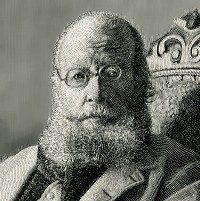
Though not as well known as say, the Fourth of July, Limerick Day deserves all the fanfare it can muster. Say it with me: "Woo hoo for Edward Lear! Woo hoo for limericks!" (Edward Lear popularized limericks in his 1846 "Book of Nonsense." He is the author of the famous poem, "The Owl and the Pussycat.")
There. Now didn't that feel good?
You'll feel even better if you create and post in the comments section below your own limerick for all the world to see. Family-friendly, please. I'll go first.
Way back when was an Englishman, Lear
Who had such a terrific career
Making rhyme after rhyme
Some absurd, some sublime
That we celebrate him over here
Now you, please. And happy Children's Book Week!
Sunday, April 18, 2010
THIS TREE COUNTS! for Earth Day

One of my favorite days of the year is right around the corner. Earth Day, April 22nd, is designed to heighten awareness of and appreciation for the Earth. What better way to do that than with a picture book about an oak tree? Critique partner and friend Alison Formento is the author of THIS TREE COUNTS! (Albert Whitman & Company, March 1, 2010), a part-counting, part-environmental awareness book with lovely language and illustrations.
Alison has agreed to stop by and answer some questions for us, on this the first stop of a blog tour.
JJS: Hi, Alison! How did THIS TREE COUNTS! go from idea to published book? Tell us about the path it took.
AF: Inspired by a large, old Oak tree, I wrote a simple ten line poem about ten animals in a giant tree telling its story, which sat unfinished in my computer files. A few months later, I saw an editor from Albert Whitman & Company speak on a panel at an SCBWI conference. After the conference, I submitted a story to her, which she rejected, but invited me to send something else, which I did. That story too, got a personal rejection and a note to send something for the very young, perhaps with a counting theme. I remembered my tree poem and worked on shaping it into story form, adding the children and teacher to hear the tree's story, and how it encourages them to plant more trees. After I ran that early version through my critique group, I submitted it to the editor and four months later, received an offer. In my case, third time was the charm. The revision process was smooth, as my editor really saw the story the same way I did, as did the illustrator, Sarah Snow. We actually expanded the story, to add a few more kids and more about how trees count to our world. A year later, THIS TREE COUNTS! is out and I couldn't be happier with the final product.
JJS: How long have you been writing for children?
AF: If you count my diary entries and the poems and stories I wrote as a child, then I've been writing for children a long time. As a freelance writer with credits in The New York Times, The Writer, Parenting and several other publications, I was first intrigued with writing non-fiction for children, and there are several factual elements to THIS TREE COUNTS! As common with many children's book authors, when I read books to my kids, it inspired me to write my own stories. I joined the SCBWI about six years ago, attended several conferences, found compatible critique partners and have fully embraced the rewarding, and often arduous, journey as writer for children.
JJS: What's the most rewarding part of being a published children's author so far? What's the most surprising part?
AF: I've just began sharing my book at libraries, schools and bookstores, but it's exactly what I'd heard from other published children's authors—Kids reactions to you and your story are the biggest rewards of all. Kids today are "greener" than ever, thanks to schools becoming more environmentally conscious, and they really enjoy telling me their favorite trees and how we use trees in our lives.
The surprising part about being a published author is how I'm able to promote my book much more than I thought I could handle. I feel fairly shy, but I'm so proud of the way my book has turned out, that it's exciting to share it any way possible. And meeting so many wonderful kids, librarians and teachers so far has already sparked a lot of great ideas for new stories.
JJS: Thanks, Alison! I wish you much success with your book.
Readers, Alison is having a contest on her blog. Win her book and help her plant 40 trees to celebrate the 40th anniversary of Earth Day. Just enter your favorite tree for a chance to win. http://alisonashleyformento.blogspot.com/
Or visit Alison's website: http://www.alisonashleyformento.com/. A portion of all proceeds of her book will go to AmericanForest.org to help plant more trees.
Learn more about Alison and THIS TREE COUNTS! Tuesday as this blog tour continues at http://rachelwrites4kids.blogspot.com/ and Wednesday at http://anom3.livejournal.com/.
Alison has agreed to stop by and answer some questions for us, on this the first stop of a blog tour.
JJS: Hi, Alison! How did THIS TREE COUNTS! go from idea to published book? Tell us about the path it took.
AF: Inspired by a large, old Oak tree, I wrote a simple ten line poem about ten animals in a giant tree telling its story, which sat unfinished in my computer files. A few months later, I saw an editor from Albert Whitman & Company speak on a panel at an SCBWI conference. After the conference, I submitted a story to her, which she rejected, but invited me to send something else, which I did. That story too, got a personal rejection and a note to send something for the very young, perhaps with a counting theme. I remembered my tree poem and worked on shaping it into story form, adding the children and teacher to hear the tree's story, and how it encourages them to plant more trees. After I ran that early version through my critique group, I submitted it to the editor and four months later, received an offer. In my case, third time was the charm. The revision process was smooth, as my editor really saw the story the same way I did, as did the illustrator, Sarah Snow. We actually expanded the story, to add a few more kids and more about how trees count to our world. A year later, THIS TREE COUNTS! is out and I couldn't be happier with the final product.
JJS: How long have you been writing for children?
AF: If you count my diary entries and the poems and stories I wrote as a child, then I've been writing for children a long time. As a freelance writer with credits in The New York Times, The Writer, Parenting and several other publications, I was first intrigued with writing non-fiction for children, and there are several factual elements to THIS TREE COUNTS! As common with many children's book authors, when I read books to my kids, it inspired me to write my own stories. I joined the SCBWI about six years ago, attended several conferences, found compatible critique partners and have fully embraced the rewarding, and often arduous, journey as writer for children.
JJS: What's the most rewarding part of being a published children's author so far? What's the most surprising part?
AF: I've just began sharing my book at libraries, schools and bookstores, but it's exactly what I'd heard from other published children's authors—Kids reactions to you and your story are the biggest rewards of all. Kids today are "greener" than ever, thanks to schools becoming more environmentally conscious, and they really enjoy telling me their favorite trees and how we use trees in our lives.
The surprising part about being a published author is how I'm able to promote my book much more than I thought I could handle. I feel fairly shy, but I'm so proud of the way my book has turned out, that it's exciting to share it any way possible. And meeting so many wonderful kids, librarians and teachers so far has already sparked a lot of great ideas for new stories.
JJS: Thanks, Alison! I wish you much success with your book.
Readers, Alison is having a contest on her blog. Win her book and help her plant 40 trees to celebrate the 40th anniversary of Earth Day. Just enter your favorite tree for a chance to win. http://alisonashleyformento.blogspot.com/
Or visit Alison's website: http://www.alisonashleyformento.com/. A portion of all proceeds of her book will go to AmericanForest.org to help plant more trees.
Learn more about Alison and THIS TREE COUNTS! Tuesday as this blog tour continues at http://rachelwrites4kids.blogspot.com/ and Wednesday at http://anom3.livejournal.com/.
Congrats, Alison! All the best!
Subscribe to:
Comments (Atom)